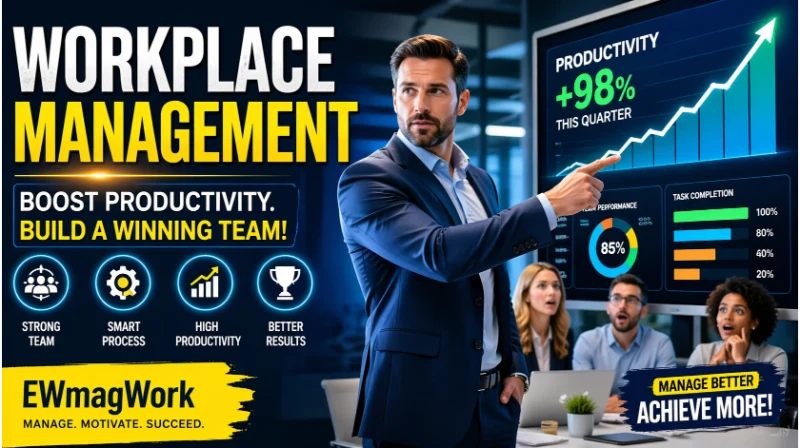
Modern organizations succeed or fail based on how well they manage their people, processes, and spaces. Workplace management ewmagwork is an emerging approach that focuses on optimizing productivity while maintaining employee well-being and operational efficiency. This guide breaks down the concept into actionable insights you can apply today.
Introduction to Workplace Management Ewmagwork
In today’s competitive environment, companies need more than traditional management methods. Workplace management ewmagwork integrates smart systems, human-centered design, and efficient workflows to create a balanced workplace.
It is not just about supervision. It is about creating a system where employees thrive, collaboration improves, and business goals are met consistently. Organizations adopting this model report better engagement, lower turnover, and stronger performance.
What Is Workplace Management Ewmagwork?
At its core, workplace management ewmagwork is a strategic framework that combines:
- People management
- Workplace design
- Technology integration
- Operational efficiency
It focuses on aligning employee needs with organizational goals.
Unlike traditional management, it emphasizes flexibility, data-driven decisions, and continuous improvement.
Why Workplace Management Matters More Than Ever
The workplace has changed rapidly in recent years. Remote work, hybrid models, and digital tools have reshaped expectations.
Key Drivers of Change
- Increased demand for flexibility
- Focus on employee well-being
- Technological advancements
- Global competition
Workplace management ewmagwork addresses these shifts by creating adaptable systems that evolve with business needs.
Core Components of Effective Workplace Management
1. Employee Experience
A positive employee experience boosts productivity and retention.
Key elements include:
- Clear communication
- Growth opportunities
- Recognition and feedback
2. Workplace Design
The physical and digital environment affects performance.
Modern workplaces focus on:
- Open collaboration spaces
- Quiet zones for deep work
- Remote-friendly systems
3. Technology Integration
Smart tools are essential for efficiency.
Examples include:
- Project management software
- Collaboration platforms
- Data analytics tools
4. Process Optimization
Streamlined workflows reduce waste and improve output.
Workplace management ewmagwork encourages continuous evaluation of processes to eliminate inefficiencies.
Benefits of Workplace Management Ewmagwork
Implementing this approach offers measurable advantages.
Increased Productivity
Employees work more efficiently in structured, supportive environments.
Better Employee Engagement
Satisfied employees contribute more and stay longer.
Improved Collaboration
Clear systems encourage teamwork and communication.
Cost Efficiency
Optimized processes reduce unnecessary expenses.
Comparison Table: Traditional vs Modern Workplace Management
| Feature | Traditional Management | Workplace Management Ewmagwork |
|---|---|---|
| Focus | Control and hierarchy | Collaboration and flexibility |
| Communication | Top-down | Open and interactive |
| Work Model | Fixed hours | Flexible and hybrid |
| Decision Making | Manager-driven | Data-driven |
| Employee Role | Task execution | Active contribution |
This comparison highlights how modern approaches create more adaptive and efficient organizations.
Strategies to Implement Workplace Management Ewmagwork
Conduct Workplace Assessment
Start by evaluating current systems.
Ask:
- Are employees productive?
- Are processes efficient?
- Is communication clear?
Invest in Technology
Choose tools that simplify workflows.
Focus on usability and integration.
Promote a Positive Culture
Encourage transparency, trust, and collaboration.
Culture plays a major role in success.
Train Leadership
Managers must adapt to new methods.
Leadership training ensures smooth implementation.
Monitor and Improve
Use data to track performance.
Refine strategies regularly.
Challenges and How to Overcome Them
Resistance to Change
Employees may hesitate to adopt new systems.
Solution: Provide training and clear communication.
Technology Overload
Too many tools can reduce efficiency.
Solution: Use only essential platforms.
Lack of Clear Strategy
Without direction, implementation fails.
Solution: Set clear goals and timelines.
Pros and Cons of Workplace Management Ewmagwork
Pros
- Enhances productivity
- Improves employee satisfaction
- Encourages innovation
- Supports flexible work models
- Reduces operational costs
Cons
- Requires initial investment
- Needs continuous monitoring
- May face resistance from traditional teams
- Depends on strong leadership
Best Practices for Long-Term Success
Focus on Communication
Transparent communication builds trust.
Prioritize Employee Well-Being
Healthy employees perform better.
Use Data for Decisions
Track metrics and adjust strategies.
Encourage Feedback
Employees provide valuable insights.
Stay Adaptable
Business environments change quickly.
Workplace management ewmagwork thrives on flexibility and continuous improvement.
Real-World Applications
Many companies are already benefiting from this approach.
Tech Companies
Use flexible workspaces and digital tools to boost innovation.
Healthcare Organizations
Optimize staff schedules and improve patient care systems.
Corporate Offices
Adopt hybrid models to balance productivity and employee satisfaction.
Future Trends in Workplace Management
The future of work will continue to evolve.
Key trends include:
- AI-driven workplace analytics
- Increased remote work adoption
- Personalized employee experiences
- Smart office environments
Workplace management ewmagwork will play a central role in adapting to these changes.
Frequently Asked Questions (FAQs)
What is workplace management ewmagwork?
It is a modern approach that combines people, processes, and technology to create efficient and engaging work environments.
Why is workplace management important?
It improves productivity, employee satisfaction, and overall business performance.
How can businesses implement it?
Start with assessment, invest in technology, train leaders, and continuously improve processes.
Is it suitable for small businesses?
Yes. Even small organizations can benefit from structured and flexible management systems.
What tools are used in workplace management?
Common tools include project management software, communication platforms, and data analytics systems.
Conclusion
Workplace management ewmagwork is more than a trend. It is a necessary evolution in how organizations operate. By focusing on people, technology, and efficiency, businesses can create environments where both employees and performance thrive.
Companies that adopt this approach position themselves for long-term success in an ever-changing world.